


You know the feeling. Not quite guilt, not quite dread, but something in between that shows up when a dental ad lands in your feed or you catch yourself covering your mouth mid-laugh. You meant to go back. Life got in the way, and somewhere along the line going back started to feel like it needed an explanation.
At Deliz Dental Studio in Valrico, Dr. Deliz and the team see this every week. Nobody here is going to count the years or make you feel bad for the gap. What follows is a plain walkthrough of your first appointment, from the phone call to the plan you leave with.
Ready to get it on the calendar? Call us at (813) 755-1800.
Avoidance rarely starts with a decision. It starts with a postponement. One skipped cleaning turns into a year, and somewhere in there the math shifts. Nothing hurts, you're chewing fine, and the issue you've noticed in the mirror has been there long enough that it no longer feels urgent. So the appointment stays on the back burner, and the better moment never quite arrives.
For some people it goes deeper. The sound of the drill, the feeling of being stuck in a chair with your mouth open, or the memory of being talked down to by a provider. That's a real fear response, not just nerves, and it deserves a real accommodation. Dr. Deliz has spent more than fourteen years treating patients who arrive in exactly that state.
Whatever the reason, the pattern tends to end the same way. The discomfort of avoiding grows quietly, while the discomfort of going stays roughly the same. At some point the weight of waiting outgrows the worry about going, and that's usually when people call.

Picking up the phone is genuinely the hardest part for a lot of people. Dental anxiety is good at turning a two-minute task into something you talk yourself out of nine times. If you have been rehearsing an opening line or expecting a cold response on the other end, you can stop.
What the call actually covers:
That is all. The front desk takes calls in Spanish or English, and nobody on the other end is keeping score.
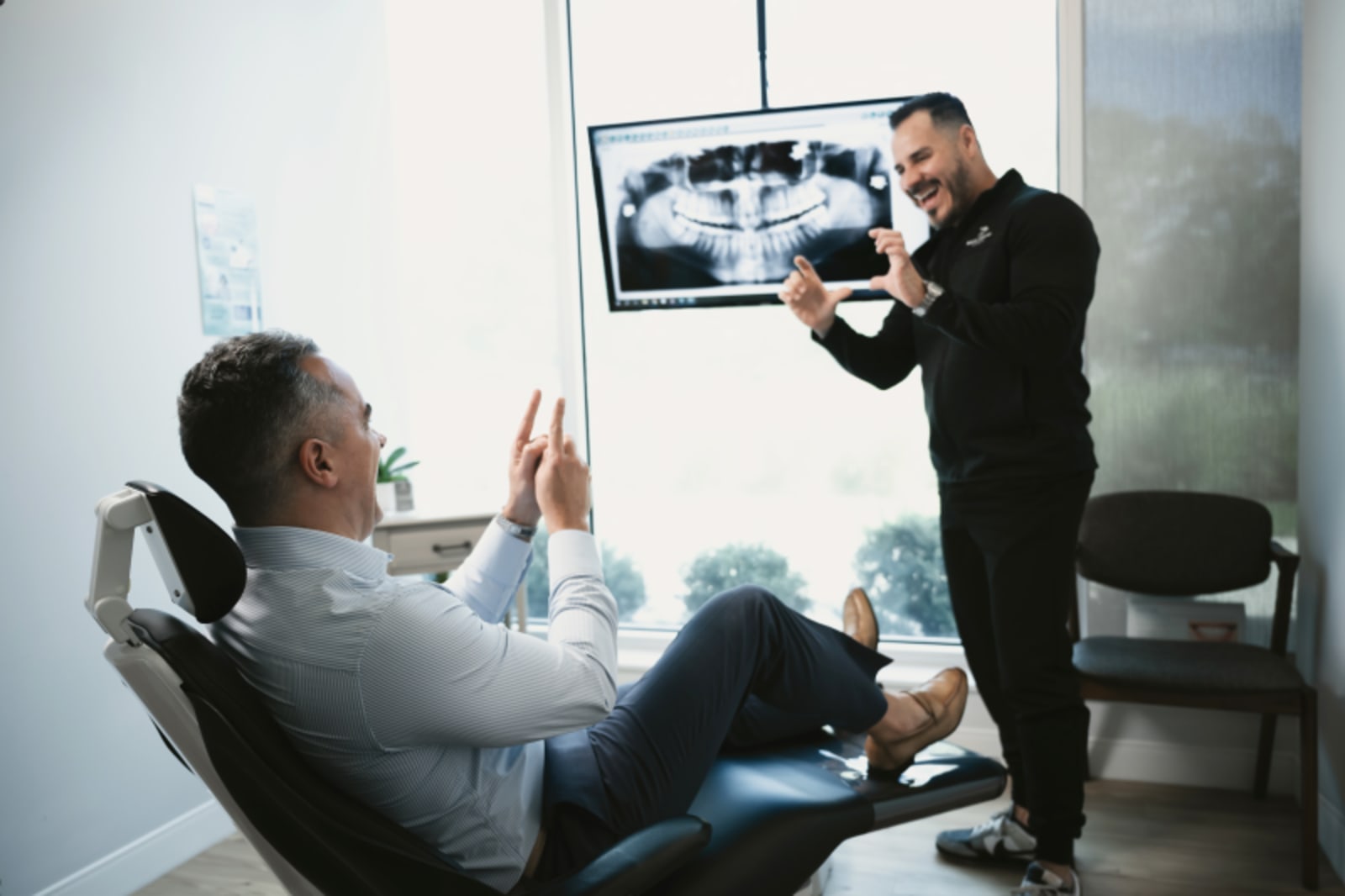
We take digital X-rays and, when needed, a cone beam scan. Digital X-rays are quick and use much less radiation than the old film kind. The cone beam scan gives us a three-dimensional picture of your teeth, roots, and jawbone, which helps us spot things a standard X-ray can miss, like bone changes or a tooth slowly breaking down underneath an old filling.
A small camera about the size of a pen lets you see your own mouth on a screen in real time. You do not have to take anyone's word that a filling is wearing out or that a spot needs watching. You can see it yourself, which most patients find reassuring.
We check your gum health, bite, existing fillings or crowns, and any wear patterns that have developed over the years. Gum disease gets particular attention because it often causes no pain in its early stages. If your teeth have always felt slightly off when you bite down, mention it. That is a real clinical finding worth addressing.
This is where you describe what you have noticed and what you have been quietly worried about. Dr. Deliz is bilingual in Spanish and English, so this happens in whichever language lets you explain yourself clearly. If you have had a concern about a tooth since high school, say it here. It is usually a much smaller problem out loud than it has felt in your head.
People assume a long gap means a painful cleaning. Sometimes it means a longer one, and occasionally it means splitting the work across two visits.
Depending on what the exam shows, your cleaning may happen the same day or get scheduled separately. If your gums are inflamed or bleeding, we may recommend a deeper cleaning, which means scaling below the gumline to clear out the buildup that causes gum disease. Gum disease treatment is handled here in Valrico, so you won't be sent to a different office across town.

Some people stay away because the chair itself triggers a stress response they can't think their way out of. That's a real fear response, not just nerves, and it has a real answer. Tell us when you call and we'll build accommodations into the plan before you arrive.
Oral conscious sedation is available. You take a prescribed pill before the appointment. By the time you're in the chair, you're deeply relaxed but still awake. You can hear us, respond to questions, and let us know if something feels uncomfortable. For many patients, that shift is what makes the appointment possible at all.
Sedation isn't necessary for everyone. Many nervous patients do well with a slower pace, a clear explanation of each step before it happens, and the option to raise a hand and pause at any point.
The worry most people carry into a first visit after a long gap isn't the exam itself. It's walking out with a treatment list so long it's paralyzing, and a number you didn't see coming. That isn't how we hand things over.
After the exam, you get a plain summary of where things stand, organized by urgency:
Cosmetic work you might want someday, like whitening, veneers, or straightening, gets its own category. None of it gets pushed on you. Costs are reviewed before you commit to anything, and you're welcome to take the plan home and come back with questions.
Then you'll know, and knowing is better than guessing. Almost everything is more fixable than the version you've imagined, and all of it is more fixable today than it will be in another two years.
No. The plan you leave with is sorted by urgency, with the most pressing issues addressed first and everything else handled at a pace that works for you. General care, root canals, implants, and orthodontics all happen here in one place, so nothing gets handed off to a different office.
Your name, whether you'd like water, and how long the wait will be. Your chart already notes that it's been a while, so nobody at the front desk asks you to explain it, and the hygienist won't open with a flossing lecture.
Not at all. Adults start orthodontic treatment in their thirties, forties, and well beyond. Implants, veneers, and whitening are all options for smiles that need real work, not just maintenance. Dr. Deliz will walk you through what applies to your specific situation.
Yes. If having a person in the room makes the difference between coming in and cancelling, bring them.
Most people who finally come in have been carrying the same small worry for years. Nothing painful enough to force action, but present enough to notice every day. The actual appointment is almost always calmer than the buildup to it.
We are at 2448 Bloomingdale Avenue in Valrico. Call in whichever language you prefer: (813) 755-1800.
Have a question? Call (813) 755-1800 or text us at (813) 548-5439. Ready to schedule an appointment? We're ready to see you!


